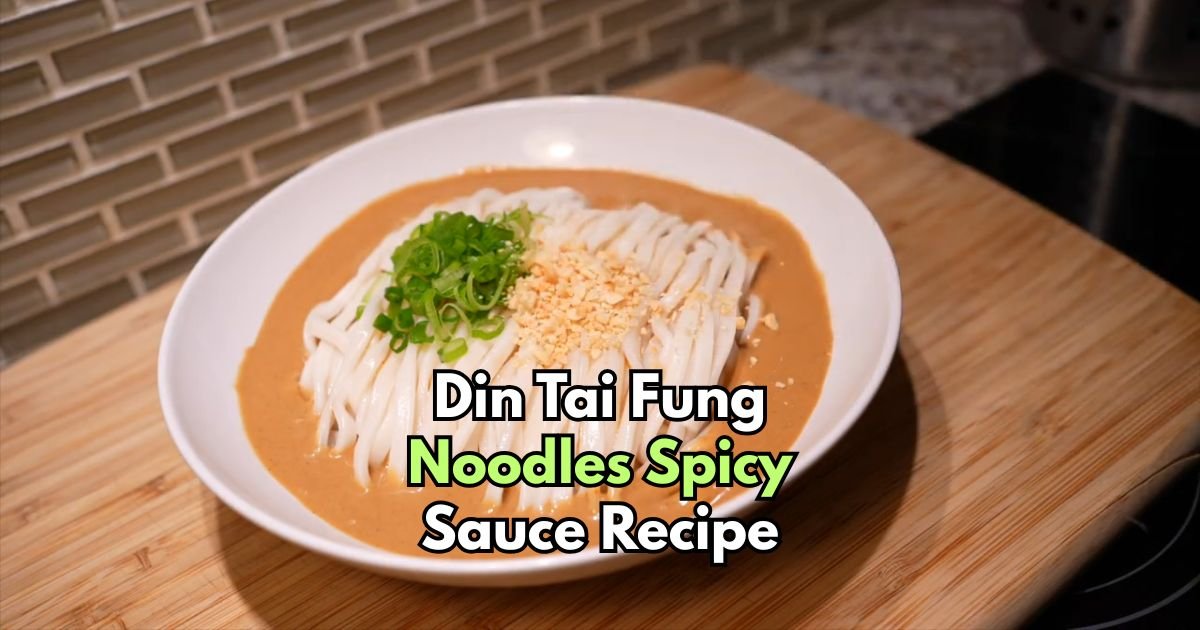
Din Tai Fung Noodles Spicy Sauce Recipe
My stove light burned out the night I first tested this Din Tai Fung Noodles Spicy Sauce Recipe. I cooked by the glow of my phone, propped against a jar of chopsticks. My husband came in, convinced I was performing a séance.
Most homemade versions of this noodle dish skip a step Din Tai Fung never skips. They rush the sauce, or swap in whatever bottled sauce sits in the fridge door.
Din Tai Fung just ran a promotion this month at its ION Orchard branch, built entirely around a spicy sauce. Diners who played along could win free wontons in that exact sauce. Their regular noodle bowl sits one line down on that same menu.
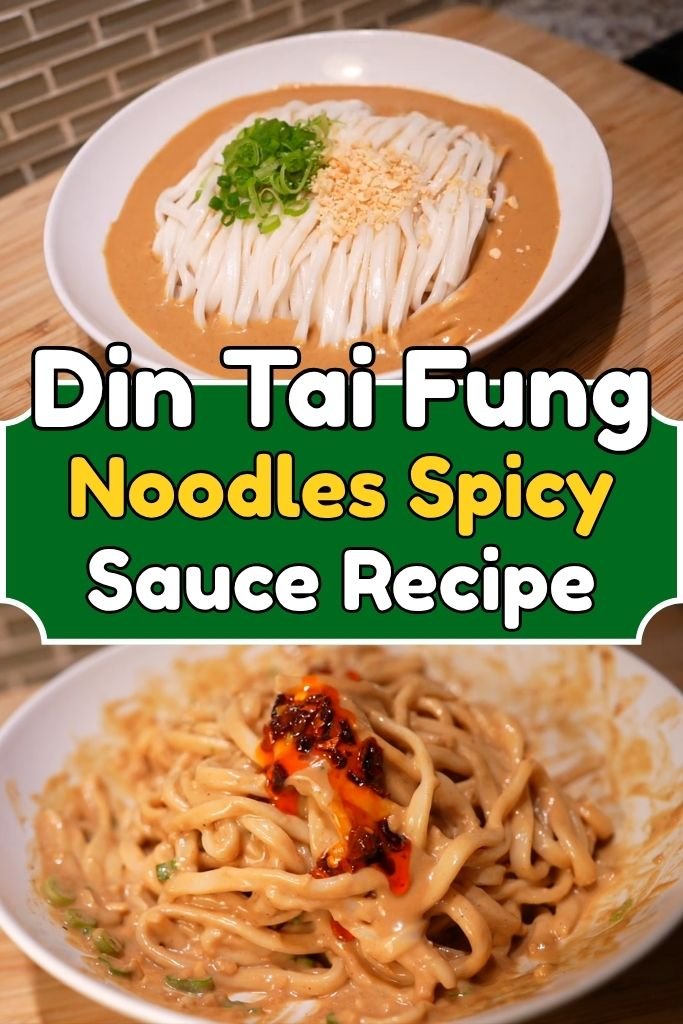
Are These Din Tai Fung Noodles the Same as Dan Dan Noodles?
People ask this in the comments of nearly every copycat noodle video I have watched. The short answer is no, though the two dishes share a few ingredients.
Dan dan noodles lean on sesame paste and chili oil as the backbone of the sauce. Din Tai Fung’s noodles use a bean-based sauce instead, closer to a light zhajiangmian.
That bean base is the detail most recipes online get wrong. Some swap in peanut butter instead, which pulls the dish toward a flavor it was never meant to have.
Ingredients for Din Tai Fung Noodles Spicy Sauce
- 300 g wheat noodles or dried Chinese egg noodles: These carry the sauce, so texture matters. I buy fresh Twin Marquis noodles from the cooler case at my local Asian grocery. Dried egg noodles work fine too, just boil them a minute longer.
- 250 g ground beef, fine grind (80/20): This is the base protein. A fine grind soaks up sauce fast. I reach for Certified Angus Beef. Ground chicken thigh works in its place.
- 100 to 120 g tau kwa (firm tofu), cubed: These cubes soak up the sauce and add a soft bite. I use House Foods firm tofu, pressed for 10 minutes before cutting. Skip it entirely for a meatier, tofu-free bowl.
- 1½ tsp neutral oil: This is just enough fat to sauté the aromatics without burning them. I keep a bottle of avocado oil on the stove. Any neutral oil works here.
- 2 tsp minced garlic: Garlic goes in first, building the base smell. I mince it fresh with a small paring knife rather than using the jarred kind.
- ½ tsp minced fresh ginger: Ginger cuts through the richness of the beef fat. It keeps the sauce from tasting flat. The ground jar version has a duller, almost dusty edge.
- 1 tbsp minced green onion, white parts only: These go into the pan early. They build a savory base note alongside the garlic and ginger. I trim them from a fresh bunch, since older ones turn slimy fast.
- 1 tbsp chopped green onion, green parts, for garnish: These go on top at the very end. They add a fresh, sharp bite against the rich sauce. Slice them thin so they scatter evenly over the noodles.
- ¼ cup shelled edamame, cooked or thawed: This adds a pop of color. It gives a firmer bite than anything else in the bowl. I keep a bag of frozen edamame in the freezer.
- ¼ tsp ground black pepper: A small hit of pepper rounds out the beef. It keeps the sauce from tasting one-note. Freshly cracked pepper makes a real difference over the pre-ground kind.
- 2 tbsp soybean paste: This is the backbone of the sauce. It gives that deep, savory-sweet base you get at the restaurant. I use Lee Kum Kee soybean paste from the jar.
- 2 tsp hoisin sauce, or 1 tbsp sweet bean paste: Hoisin adds sweetness and a little tang. It balances the salty soybean paste. Swap in sweet bean paste for a deeper, less tangy result closer to what Din Tai Fung actually uses.
- 1 tbsp soy sauce: This adds straight salt and umami without changing the color of the sauce much. Any all-purpose soy sauce works, though I keep Pearl River Bridge on hand.
- 1 tsp dark soy sauce: Dark soy sauce gives the sauce its deep brown color, without adding much extra salt. A little goes a long way here.
- 1 tsp sugar: Sugar rounds out the salty and savory notes and keeps the sauce from tasting sharp. Palm sugar works too, with a deeper edge.
- 1 tbsp rice vinegar: This adds a bright edge and cuts some of the richness. It works as the beef fat cooks down. I use Marukan rice vinegar for this.
- ½ cup water or unsalted chicken stock: The liquid loosens the sauce. It helps the sauce coat the noodles instead of clumping. Stock adds more savory depth than plain water does.
- 1½ tbsp chili crisp: This is what turns the dish into a spicy sauce instead of a mild one. I always reach for Lao Gan Ma. Use less for milder heat, or skip it for the original.
Equipment You’ll Need
- Large wok or skillet: browns the beef evenly
- Medium mixing bowl: whisks the sauce smooth
- Fine-mesh strainer: drains noodles without rinsing
- Chef’s knife: minces garlic, ginger, scallions
- Small ladle: portions sauce over noodles
- Digital kitchen scale: weighs beef and tofu accurately
How to Make Din Tai Fung Noodles Spicy Sauce
1. Prep Everything First: Cube the tofu. Mince the garlic, ginger, and white scallion parts. Slice the green tops for later.
Measure the beef and set every bowl within reach of the stove. I once eyeballed the beef instead of weighing it, and the sauce came out thinner than usual.
2. Mix the Sauce: In a small bowl, whisk the soybean paste, hoisin, and soy sauce. Add the dark soy sauce, sugar, and rice vinegar, then stir until smooth. Set the bowl aside near the stove.
3. Cook the Aromatics: Heat the neutral oil in a wok over medium heat. Add the white parts of the green onion, garlic, and ginger. Cook for about 45 seconds, stirring constantly, until fragrant.
The garlic should turn light gold, not brown. Pull the pan off heat fast should it start to darken. A raw, sharp garlic smell means it needs a few more seconds in the pan.
4. Brown the Beef: Add the ground beef to the pan, breaking it into small pieces with a spatula. Cook for about 4 minutes, until no pink remains. Stir in the black pepper, working the spatula through it often so the beef stays fine.
The beef is ready when it turns pale gray-brown, with almost no pink left in the center.
5. Add the Sauce and Tofu: Pour the sauce mixture into the pan and stir until the beef is fully coated. Fold in the tau kwa cubes gently, so they don’t break apart. Give it one more stir so the tofu picks up color too.
6. Add Liquid and Chili Crisp: Pour in the water or stock, then stir in the chili crisp for heat. Lower the heat and let everything simmer for 9 minutes, stirring every couple of minutes so nothing sticks.
The sauce is ready when it turns glossy and coats the back of a spoon. A thin, watery sauce means it needs another minute or two of heat. I test this by dragging a spoon through the middle of the pan.
7. Cook the Noodles: Boil the noodles per the package directions. Fresh ones take about 6 minutes. Dried ones take closer to 8. Drain well but skip the rinse, so the sauce clings to the strands. Divide among two or three bowls right away.
Fish out one noodle around the 6-minute mark and bite it. It should have a slight chew left, not a mushy center.
8. Assemble and Garnish: Spoon the beef and tofu sauce generously over the noodles. Scatter the edamame and green scallion tops on last. Toss everything gently right before serving, so the sauce reaches every strand. This part takes less than a minute, start to finish.
Tips for Making the Best Spicy Noodles
- Sauce turns gluey: Thin it out with a splash of water or stock. Add it a tablespoon at a time, off the heat. Keep adding water slowly until it pours easily.
- Sauce reduces too fast: This happened when I swapped my wok for a thin nonstick skillet. Stick with a heavier pan and lower the heat slightly.
- Tofu falls apart: Press it for 10 minutes before cubing, and fold it in gently near the end of cooking. A metal spatula breaks it apart faster than a wooden one.
- Noodles clump in the bowl: Toss them with a scant teaspoon of oil right after draining. Do this before the sauce goes on.
- Sauce tastes flat: Add a small extra splash of rice vinegar or a pinch more sugar to balance the salt.
- Garlic turns bitter: Pull the pan off heat the moment it smells fragrant, before it has a chance to brown.
Easy Ways to Customize This Noodle Recipe
1. Extra Spicy Version: I double the chili crisp to 3 tablespoons and add a scant teaspoon of Sichuan peppercorn oil. This turns the sauce properly numbing. I only make it when my brother-in-law visits.
2. Vegetarian Swap: I skip the beef completely and double the tofu, using 240 grams, pressed firm. The sauce still thickens nicely, and I serve this version on meatless Mondays.
3. Egg-Topped Bowl: A soft-boiled egg, jammy in the center, goes on top right before serving. I cook it for exactly 6 minutes and 30 seconds, then shock it in ice water.
4. Extra Veggie Bowl: I add julienned cucumber and shredded carrot on top for crunch. It’s the way the restaurant sometimes garnishes its noodle dishes. This version feels lighter for warm weather dinners.
5. Peanut Version: A tablespoon of natural peanut butter stirred into the finished sauce changes the flavor entirely. It turns nuttier and richer, closer to dan dan noodles. I make this one for my kids, who like the milder result.
6. Cold Noodle Version: I toss the cooked noodles and cooled sauce with extra rice vinegar. Then I chill everything for an hour before serving. This one works best on hot, humid evenings.
What to Serve With Spicy Noodles
Cucumber salad is my go-to side, since the vinegar cuts through the richness of the beef sauce. I make it with rice vinegar, a little sugar, and thin cucumber rounds, salted first to pull out extra water. Sesame seeds finish it off.
Hot and sour soup works well on the side too, especially in colder months. A light broth balances the richness of the noodle bowl, and the vinegar echoes the cucumber salad. I buy the soup base already prepped from the fridge section, to save time.
String beans with garlic make a solid green side, cooked fast in a screaming hot wok. They add real crunch next to the softer noodles, and the garlic ties both dishes together. I use the same wok after plating, so cleanup happens just once.
How to Store and Reheat Leftover Noodles
Leftovers keep well for 3 days in the fridge, stored in a sealed glass container. I use a rectangular container instead of a round one, so the noodles pack down flat and reheat evenly. Plastic containers held onto smells, so glass works better now.
The noodles soak up more sauce overnight, so they turn drier by day two. A splash of water in the pan while reheating brings the texture back close to fresh. Skip the rinse before storing, so the sauce doesn’t wash off the noodles.
I reheat everything in a skillet over medium heat, not the microwave, since the microwave leaves the tofu rubbery. A few minutes on the stovetop, stirring often, brings it back to life. Stir it constantly, so nothing scorches on the bottom of the pan.
Freezing works too, for up to 1 month, though I only freeze the beef sauce, not the noodles. Frozen noodles turn mushy once thawed, so I always cook a fresh batch instead. Thaw the sauce overnight in the fridge before reheating it on the stove.
Din Tai Fung Noodles Spicy Sauce Recipe FAQs
1. Can You Use Ground Chicken Instead of Beef?
Yes, ground chicken thigh works well here, though it’s leaner than beef. Add a touch more oil to the pan, so the meat doesn’t stick. Season it slightly more too, since chicken carries less natural flavor.
2. Do You Need a Wok to Make These Noodles?
A heavy skillet works fine in place of a wok. Just keep the heat slightly lower, since thin pans scorch the aromatics faster. A wok just makes tossing the noodles at the end a little easier. Either option gets the job done well.
3. How Can You Make the Noodles Less Spicy?
Cut the chili crisp to a scant teaspoon, or leave it out completely for a mild, kid-friendly bowl. The rest of the sauce stays the same, so the flavor base doesn’t change much.
4. Why Did the Sauce Turn Out Too Salty?
Different brands of soybean paste vary a lot in salt content. Taste the sauce before it hits the pan, and cut the added soy sauce slightly next time. Low-sodium soy sauce also helps, without losing the depth of flavor.
5. Can You Use Gluten-Free Noodles?
Rice noodles or gluten-free wheat noodles both work here. Rice noodles cook faster, so pull them the moment they turn tender, around 4 minutes. Check the noodle package for exact cook times, since brands vary a lot. Both hold up fine under the spicy sauce.
6. What’s the Difference Between Soybean Paste and Soybean Sauce?
Soybean paste is thick and chunky, closer to a fermented bean spread. Soybean sauce is thinner and more liquid, closer to a dark soy sauce. Most grocery stores stock the paste version, sold in small glass jars. Either works, though paste gives more body.
7. What Can You Use Instead of Rice Vinegar?
Black vinegar works as a close swap, with a slightly deeper, smokier edge. Apple cider vinegar works too, though it tastes a touch sharper. Start with less and taste as you go.
8. Can You Make This Noodle Recipe Nut-Free?
Yes, the base recipe has no nuts at all. Only the peanut variation adds them, so leave that swap out. The rest of the sauce stays exactly the same. Double check your chili crisp brand too, since some blends include peanuts.
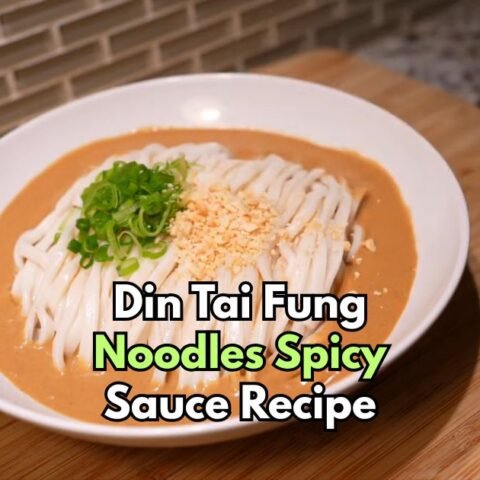
Din Tai Fung Noodles Spicy Sauce Recipe
Din Tai Fung Noodles Spicy Sauce Recipe features chewy noodles, savory beef, tofu, and spicy bean sauce, ready in just 35 minutes.
Ingredients
- 300 g wheat noodles or dried Chinese egg noodles
- 250 g ground beef, fine grind (80/20)
- 100–120 g tau kwa (firm tofu), cubed
- 1 ½ tsp neutral oil
- 2 tsp minced garlic
- ½ tsp minced fresh ginger
- 1 tbsp minced green onion, white parts
- 1 tbsp chopped green onion, green parts
- ¼ cup shelled edamame
- ¼ tsp ground black pepper
- 2 tbsp soybean paste
- 2 tsp hoisin sauce or 1 tbsp sweet bean paste
- 1 tbsp soy sauce
- 1 tsp dark soy sauce
- 1 tsp sugar
- 1 tbsp rice vinegar
- ½ cup water or unsalted chicken stock
- 1 ½ tbsp chili crisp
Instructions
- Prep Everything First: Cube the tofu. Mince the garlic, ginger, and white scallion parts. Slice the green tops for later. Measure the beef and set every bowl within reach of the stove. I once eyeballed the beef instead of weighing it, and the sauce came out thinner than usual.
- Mix the Sauce: In a small bowl, whisk the soybean paste, hoisin, and soy sauce. Add the dark soy sauce, sugar, and rice vinegar, then stir until smooth. Set the bowl aside near the stove.
- Cook the Aromatics: Heat the neutral oil in a wok over medium heat. Add the white parts of the green onion, garlic, and ginger. Cook for about 45 seconds, stirring constantly, until fragrant. The garlic should turn light gold, not brown. Pull the pan off heat fast should it start to darken. A raw, sharp garlic smell means it needs a few more seconds in the pan.
- Brown the Beef: Add the ground beef to the pan, breaking it into small pieces with a spatula. Cook for about 4 minutes, until no pink remains. Stir in the black pepper, working the spatula through it often so the beef stays fine. The beef is ready when it turns pale gray-brown, with almost no pink left in the center.
- Add the Sauce and Tofu: Pour the sauce mixture into the pan and stir until the beef is fully coated. Fold in the tau kwa cubes gently, so they don't break apart. Give it one more stir so the tofu picks up color too.
- Add Liquid and Chili Crisp: Pour in the water or stock, then stir in the chili crisp for heat. Lower the heat and let everything simmer for 9 minutes, stirring every couple of minutes so nothing sticks. The sauce is ready when it turns glossy and coats the back of a spoon. A thin, watery sauce means it needs another minute or two of heat. I test this by dragging a spoon through the middle of the pan.
- Cook the Noodles: Boil the noodles per the package directions. Fresh ones take about 6 minutes. Dried ones take closer to 8. Drain well but skip the rinse, so the sauce clings to the strands. Divide among two or three bowls right away. Fish out one noodle around the 6-minute mark and bite it. It should have a slight chew left, not a mushy center.
- Assemble and Garnish: Spoon the beef and tofu sauce generously over the noodles. Scatter the edamame and green scallion tops on last. Toss everything gently right before serving, so the sauce reaches every strand. This part takes less than a minute, start to finish.
Nutrition Information:
Serving Size: 1Amount Per Serving: Calories: 520
This noodle bowl earns its spot in my weekly rotation. The sauce comes together in one pan while the noodles boil. That kind of simple math keeps it in regular use at my house.
The chili crisp at the end is what separates my version from the plain original. Once the tofu soaks up that glossy sauce, it tastes better than the noodles alone ever could.