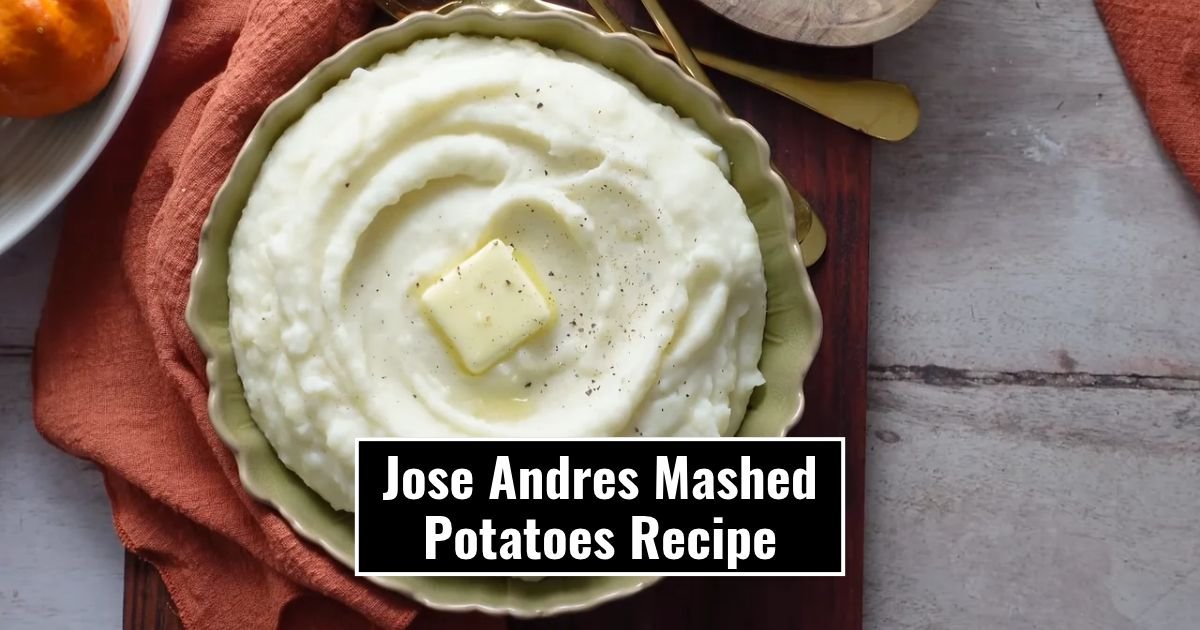
Jose Andres Mashed Potatoes Recipe
This Jose Andres Mashed Potatoes Recipe follows the Spanish style of Jaleo, the Washington, D.C., restaurant where José Andrés first introduced tapas to many American diners. Small plates designed for sharing at the table are the restaurant’s signature.
My version began as a recipe clipping my aunt left on my counter. It sat under a magnet for two weeks before a drizzly Sunday finally sent me to the stove.
Try it when you’re ready to move beyond the same buttery mashed potatoes served every November. Just keep a small bowl of the classic version nearby for any guest who prefers tradition.
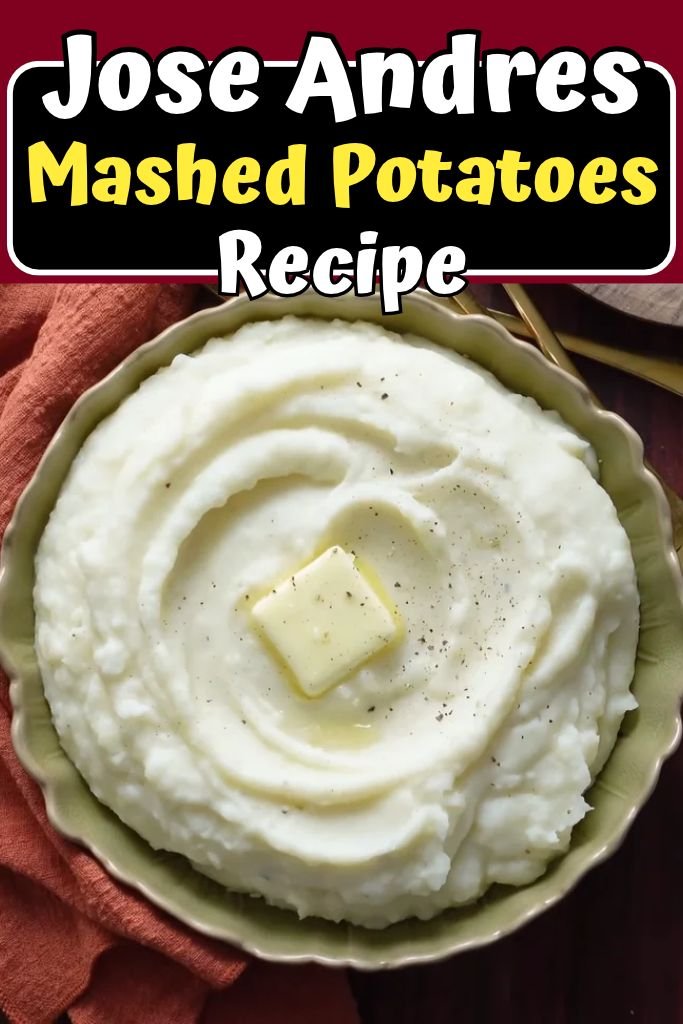
Why This Mash Never Turns Gluey or Watery
Gluey mashed potatoes are caused by excess starch released during mashing. Russet potatoes release starch quickly when subjected to heavy pressure, and using a mixer or food processor can turn them into a paste in less than a minute. A hand masher, on the other hand, helps preserve the potatoes’ structure and creates a better texture.
Watery mashed potatoes are usually the result of excess moisture. After draining, return the potato chunks to the hot pot for a full minute to allow steam to evaporate the surface moisture before adding any cream.
The size of the potato pieces also matters. Cutting them into two-inch chunks rather than small cubes reduces water absorption during boiling, helping preserve their natural flavor.
For those who prefer butter-free mashed potatoes, this version uses olive oil instead. Stirring it in gradually helps distribute the fat evenly throughout the potatoes rather than allowing it to pool on the surface. The result is a glossy finish and a rich, dense texture.
Ingredients for Jose Andres Mashed Potatoes
3 pounds russet potatoes: High starch makes russets break into a dry, fluffy mash that drinks up warm cream. I buy the 10-pound Idaho bag at Costco and pick firm ones with smooth skin and no green patches.
Peel them, then cut into 2-inch chunks so they absorb less water. Yukon Golds work well in place of russets for a denser mash. The texture sits heavier, and the color turns yellow.
1 head garlic: Roasting turns the cloves into a soft, sweet paste that spreads evenly. Raw garlic would leave sharp pockets. I pick my heads at the Mexican market on my corner, choosing tight, heavy ones.
Light heads feel hollow and roast dry. Skip any with green shoots poking through the cloves, since sprouted garlic roasts bitterly. Store spare heads in a cool, dark cupboard.
3 tablespoons extra-virgin olive oil, divided: Oil carries garlic flavor and adds fat without water. I reach for Castillo de Canena, a peppery Spanish bottle. Split it 2 teaspoons for roasting, 5 for the pot, 2 for the top.
A mild olive oil works in place of a bold one when your guests dislike peppery notes. Avoid bottles labeled light, since refined oil has little flavor to carry. Keep the bottle away from the stove, because heat dulls it.
1 tablespoon kosher salt, plus more to taste: Salt in the water seasons the potato from the inside. A later sprinkle cannot do that. I use Diamond Crystal because the flakes measure lightly and dissolve fast.
Morton packs denser, so cut the amount by about a third when you use it. The final salt goes in a pinch at a time, after the cheese has melted, since Manchego adds its own.
1½ cups heavy cream: Cream adds the fat that makes the mash silky. Warming it first keeps the potatoes hot enough to melt the cheese. I reached for Organic Valley. Heat it until steam rises, never to a boil.
Half-and-half works in place of cream, though the mash turns looser and less rich. Start with 1 cup and add more slowly while you mash. Milk alone leaves the mash thin.
4 ounces young Manchego, cut into ¼ inch dice: It melts into soft strings and adds salt. The wedge from Trader Joe’s works well. Dice it small so it melts before the mash cools. Aged Manchego turns dry and sharp, so skip it here. Grated Gruyère is a fair swap, with a nuttier, sweeter edge. Cut the rind off first, since it stays hard.
1 tablespoon chopped chives, optional: Chives add a fresh onion note that cuts through the cream. Snip them with kitchen scissors right before serving so the color stays bright green.
Thinly sliced scallion greens work in place of chives. Buy a small bunch, since one tablespoon needs only a few stems.
Tools I Recommend for This Recipe
- Large stockpot: 6-quart, for boiling
- Small saucepan: warms the cream
- Heavy-duty foil: seals the garlic
- Baking sheet: catches oil drips
- Potato masher: hand mashing only
- Colander: drains potatoes fast
- Wooden spoon: stirs in cheese
- Chef’s knife and peeler: even chunks
- Fork: mashes the garlic paste
Step-by-Step Instructions to Make Jose Andres Mashed Potatoes
1. Roast the Garlic: Heat the oven to 350°F. Slice the top third off the garlic head and drizzle it with 2 teaspoons of oil. Wrap it tightly in foil and roast on a baking sheet for about 55 minutes. The cloves are done when they squeeze soft through the foil and smell sweet and nutty.
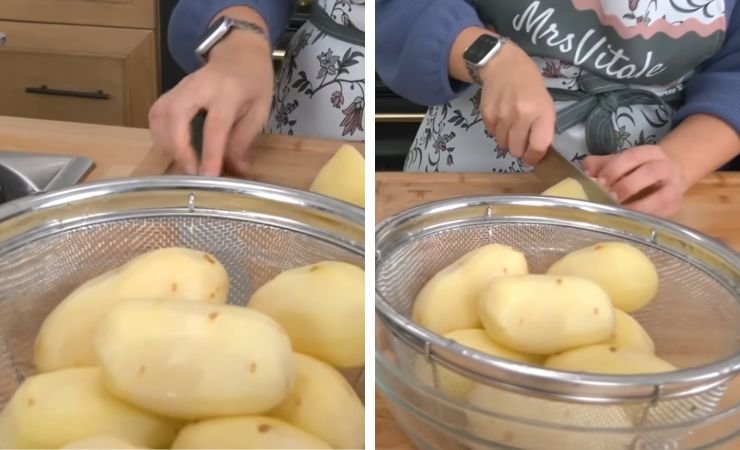
2. Cut the Potatoes: Peel 3 pounds of russets and cut them into 2-inch chunks. My Costco bag gave me four medium potatoes, which I halved. Cut any large ones in thirds so every piece cooks at the same speed.
3. Boil with Salt: When the garlic has roasted for 25 minutes, cover the potatoes with cold water by 2 inches. Add 1 tablespoon of salt, bring to a boil, and cook for about 20 minutes.
A knife should slide into the center without pressure. The edges of each chunk look slightly frayed.
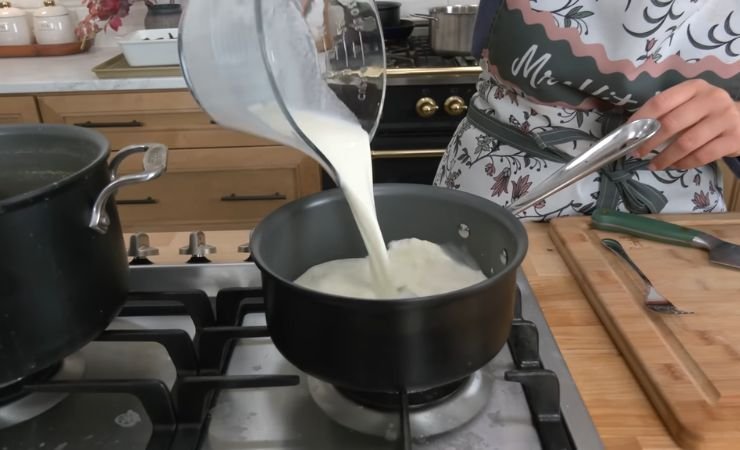
4. Warm the Cream: Pour 1½ cups of cream into a small saucepan over medium-low heat. Warm it for about 4 minutes, until steam rises and tiny bubbles ring the edge. Do not let it boil.
5. Drain and Dry: Drain the potatoes well and return them to the hot pot over medium-high heat. Stir for 1 minute. Steam should stop rising, and the chunks should look dull and floury instead of shiny. A thin film forms on the pot bottom.
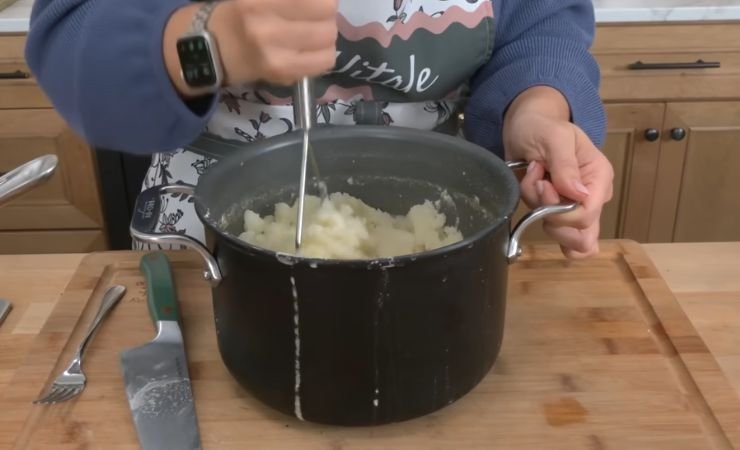
6. Mash in the Cream: Mash with a hand masher until a few lumps remain. My old wire masher has a bent handle and still works fine. Add half the warm cream and mash again, then stir in the rest.
In my first test I poured in cold cream. The mash cooled fast, and the cheese added next stayed in hard cubes. Overmashing turns the potatoes gummy, and a splash of warm cream loosens them slightly.
7. Melt the Cheese: Add 4 ounces of diced Manchego. Stir with a wooden spoon for about 90 seconds. The cubes should soften into thin strings, with a few tiny flecks still visible.
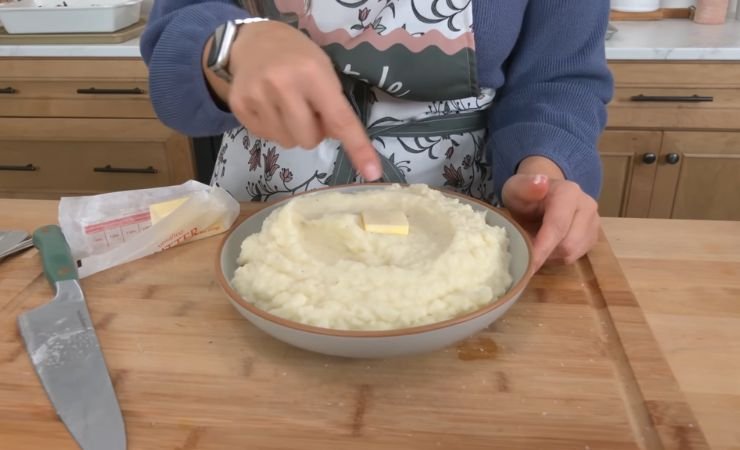
8. Stir in Garlic and Oil: Squeeze the roasted cloves into a bowl and mash them with a fork. Stir the paste into the potatoes, then pour in 5 teaspoons of oil in a thin stream. Pouring too fast leaves oily streaks. Slow stirring keeps the mash glossy. Taste, then add salt a pinch at a time.
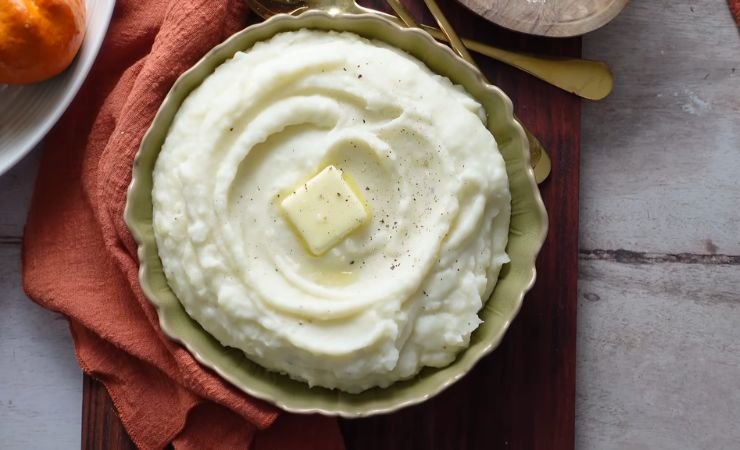
9. Finish and Serve: Spoon the mash into a warm bowl. Drizzle with the last 2 teaspoons of oil and scatter the chives on top. Serve right away, while the cheese still stretches.
Tips, Tricks, and Common Mistakes to Avoid
- Gray Flecks: Peeled russets darken in open air. Keep them in a bowl of cold water until the pot is ready.
- Hard Lumps: Lumps usually come from oversized chunks. Press them against the pot wall with a spoon.
- Bland Mash: Under-salted boiling water is the cause. Stir in salt a pinch at a time, tasting between pinches.
- Tight Mash After Resting: Starch firms as it cools. Loosen it with 2 tablespoons of warm cream, stirring gently.
- Bitter Garlic: Dark cloves mean the foil leaked and the garlic scorched. Discard them and double-wrap next time.
Delicious Variations on Jose Andres Mashed Potatoes
1. Smoked Paprika: Stir in ½ teaspoon of pimentón de la Vera with the garlic paste. It adds smoky warmth and an orange tint. I serve this version with roasted chicken.
2. Crisp Jamón: Chop 2 ounces of jamón serrano and crisp it in a dry skillet for about 4 minutes. Scatter it on top for a salty crunch. It suits a brunch plate with fried eggs.
3. Double Garlic: Roast two heads and stir in both pastes. The mash gets a rounder, sweeter garlic note, which pairs well with seared steak.
4. Lemon Zest: Grate in 1 teaspoon of zest with the last drizzle of oil. It cuts the cream and brightens the fruity side, so I pick it for fish.
5. Caramelized Onion: Cook 1 cup of sliced onion for about 35 minutes, then fold it in. It adds a deep sweetness that suits a pot roast.
What to Serve with Jose Andres Mashed Potatoes
On Thanksgiving, this mash sits next to roast turkey and plenty of gravy. The garlic and olive oil hold their own against sage stuffing, and the cheese does not clash with cranberry sauce.
On a weeknight, pair it with lemon roast chicken. The bright pan juices run into the potatoes and loosen them slightly. Spanish chorizo, seared until the fat renders, also suits it well.
Seared steak and braised short ribs suit it too, since the mash soaks up their juices. Garlicky green beans or sautéed spinach bring a slightly bitter edge that balances the cream.
Storage Tips
Cool the mash within 2 hours, then pack it into an airtight glass container. It keeps in the refrigerator for up to 3 days. A 6-serving batch fits in a 1-quart container.
Cold mash turns firm because the cheese and starch tighten. Press a piece of parchment onto the surface before sealing, which stops dry skin from forming. Avoid the microwave, since the edges overheat before the center warms.
Instead, move it to a heatproof bowl set over a pot of barely bubbling water. Cover the bowl, stir now and then, and heat until it is warm all the way through.
Stir in 2 tablespoons of warm cream near the end to restore the soft texture. I skip the freezer, since thawed cream tends to separate and turn grainy.
Jose Andres Mashed Potatoes Recipe FAQs
1. Do I have to peel the potatoes?
Yes. Russet skins are thick and leave dark, papery bits in the mash. Peeled potatoes also absorb the warm cream and oil more evenly. The texture stays uniform from the first scoop to the last.
2. Can I use a hand mixer?
Avoid it. Beaters rupture the starch cells and turn russets into paste within seconds. A hand masher or a ricer gives a fluffy result with far less risk of a gummy bowl. Mashing by hand takes under 3 minutes.
3. Does it need butter on top?
No. The original uses olive oil in its place. A final drizzle adds the glossy finish a pat of butter would give, along with a peppery aroma.
4. How garlicky does it taste?
Mild and sweet. One roasted head spread through 3 pounds of potatoes gives a rounded note. It has none of the sharp bite that raw cloves leave on the tongue.
5. How long can the mash stay warm before serving?
Up to 1 hour in a heatproof bowl set over barely bubbling water, stirring now and then. Loosen it with a spoonul of warm cream whenever the surface looks tight.
6. Is this mash gluten-free?
Yes. Every ingredient is naturally gluten-free. Check the cream label for thickeners. Read the package on any pre-cut cheese for an anti-caking coating.
7. Can I use pre-shredded cheese?
Dice a wedge instead. Packaged shreds wear a starchy coating that keeps them separate. They can leave small grainy clumps in the finished mash.
Jose Andres Mashed Potatoes Recipe
Jose Andres mashed potatoes recipe with roasted garlic, Manchego, olive oil and warm cream, no butter needed. Done in about 85 minutes.
Ingredients
- 3 pounds russet potatoes
- 1 head garlic
- 3 tablespoons extra-virgin olive oil
- 1 tablespoon kosher salt
- 1 ½ cups heavy cream
- 4 ounces young Manchego
- 1 tablespoon chopped chives
Instructions
Roast the Garlic: Heat the oven to 350°F. Slice the top third off the garlic head and drizzle it with 2 teaspoons of oil. Wrap it tightly in foil and roast on a baking sheet for about 55 minutes. The cloves are done when they squeeze soft through the foil and smell sweet and nutty.
Cut the Potatoes: Peel 3 pounds of russets and cut them into 2-inch chunks. My Costco bag gave me four medium potatoes, which I halved. Cut any large ones in thirds so every piece cooks at the same speed.
Boil with Salt: When the garlic has roasted for 25 minutes, cover the potatoes with cold water by 2 inches. Add 1 tablespoon of salt, bring to a boil, and cook for about 20 minutes. A knife should slide into the center without pressure. The edges of each chunk look slightly frayed.
Warm the Cream: Pour 1½ cups of cream into a small saucepan over medium-low heat. Warm it for about 4 minutes, until steam rises and tiny bubbles ring the edge. Do not let it boil.
Drain and Dry: Drain the potatoes well and return them to the hot pot over medium-high heat. Stir for 1 minute. Steam should stop rising, and the chunks should look dull and floury instead of shiny. A thin film forms on the pot bottom.
Mash in the Cream: Mash with a hand masher until a few lumps remain. My old wire masher has a bent handle and still works fine. Add half the warm cream and mash again, then stir in the rest. In my first test I poured in cold cream. The mash cooled fast, and the cheese added next stayed in hard cubes. Overmashing turns the potatoes gummy, and a splash of warm cream loosens them slightly.
Melt the Cheese: Add 4 ounces of diced Manchego. Stir with a wooden spoon for about 90 seconds. The cubes should soften into thin strings, with a few tiny flecks still visible.
Stir in Garlic and Oil: Squeeze the roasted cloves into a bowl and mash them with a fork. Stir the paste into the potatoes, then pour in 5 teaspoons of oil in a thin stream. Pouring too fast leaves oily streaks. Slow stirring keeps the mash glossy. Taste, then add salt a pinch at a time.
Finish and Serve: Spoon the mash into a warm bowl. Drizzle with the last 2 teaspoons of oil and scatter the chives on top. Serve right away, while the cheese still stretches.
Nutrition Information:
Serving Size: 1Amount Per Serving: Calories: 510
Keep the cream warm, mash gently, and serve the bowl while steam still rises.