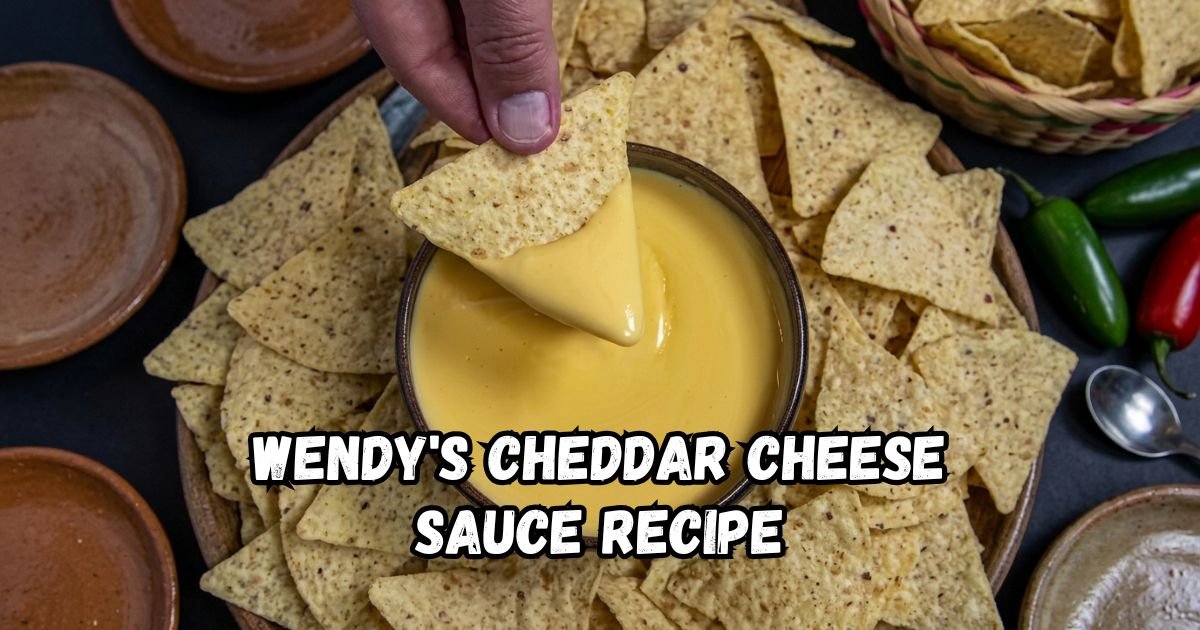
Wendy’s Cheddar Cheese Sauce Recipe
This Cheddar Cheese Sauce is a creamy condiment that enhances many dishes. Cheese lovers like it because sharp cheddar and a smooth texture balance each other. It clings to fries without turning stiff. Here is my version of Wendy’s Cheddar Cheese Sauce.
I have made this Wendy’s Cheddar Cheese Sauce Recipe many times, and high-quality sharp cheddar is the key.
Once, I mistakenly used mild cheddar, and the sauce didn’t taste good at all. It was flat, with none of the tang that sharp cheddar brings.

Why This Cheese Sauce Works
Wendy’s describes its own sauce as tangy and buttery. It tops several of the chain’s loaded fries. Sharp cheddar and a small mix of spices give the sauce its flavor. Mustard powder adds the tang, and smoked paprika adds a faint campfire note.
Cooking from scratch keeps preservatives out and lets you pick the cheese. A block of aged cheddar from the deli case beats any bag of shreds. Cabot from my local Kroger melts well every time. Shred it yourself, because bagged cheese melts less evenly.
This Sauce Recipe is a copycat, not a clone. Mine tastes sharper and more savory, because aged cheddar carries more tang than a mild blend. Mine also runs paler, since it has no added color.
Anyone who avoids additives may hesitate at sodium citrate. It is the sodium salt of citric acid, and it keeps the sauce silky. Leave it out, and the sauce turns thicker and needs gentler heat.
Ingredients for Wendy’s Cheddar Cheese Sauce
1 Cup Whole Milk: Milk is the liquid base, and its fat gives the sauce a creamy body. I use Horizon organic whole milk. Whisk it constantly while it heats so a skin never forms. Cold milk blends in more smoothly than warm.
For a richer sauce, swap in ½ cup heavy cream plus ½ cup water. Expect a thicker coat on the spoon and a rounder dairy taste.
1½ Cups Sharp Cheddar Cheese, Shredded: Cabot Seriously Sharp is the block I buy. Aged cheddar carries the tang that defines this sauce. Shred it yourself. Bagged shreds carry anti-caking starch that keeps the cheese from melting smoothly.
Colby or Monterey Jack melts more easily but tastes milder. Use half sharp cheddar and half Jack for a gentler sauce.
1 Tablespoon Unsalted Butter: Kerrygold unsalted butter starts the base, and its milk solids smell nutty once the butter foams. Melt it slowly over low heat so it never browns past pale gold. Unsalted lets you control the seasoning.
Neutral oil works in place of butter. The sauce loses its nutty note and tastes plainer.
1 Tablespoon Cornstarch: Argo cornstarch thickens the sauce and keeps it smooth as it cools. Cook it in the butter for a full minute so the raw starch taste disappears. Whisk the whole time to stop lumps.
All-purpose flour works in the same amount. It gives a slightly cloudier sauce and needs an extra 30 seconds in the butter.
½ Teaspoon Salt: Diamond Crystal kosher salt sharpens the cheese flavor and balances the tang. Start with ½ teaspoon and adjust only at the end, because sharp cheddar already carries plenty of salt. Taste a sliver of the cheese first, since some blocks run saltier.
Fine sea salt is denser, so use a scant ⅜ teaspoon instead.
½ Teaspoon Onion Powder: McCormick onion powder adds a savory backbone with no onion pieces to strain out. It clumped in my humid August kitchen, so I now keep the jar tightly closed.
Garlic powder works in the same amount. It tastes sharper and more pungent, so taste before adding more.
½ Teaspoon Tomato Paste: Tomato paste from an Amore tube adds umami and a faint sweetness that rounds off the cheese’s acidity. Use a level half teaspoon, since more turns the sauce orange-red. Freeze the rest of the tube, where it keeps for months.
Ketchup works in place of it at 1 teaspoon. It is thinner and sweeter.
¼ Teaspoon Smoked Paprika: Simply Organic smoked paprika gives a faint campfire note and a warm color. Stir it in with the other spices, not earlier, because it scorches fast over direct heat.
Sweet paprika keeps the color but loses the smoke. Hot paprika adds a slow burn.
¼ Teaspoon Mustard Powder: Colman’s mustard powder supplies a tang that makes cheddar taste sharper, and it helps the fat stay blended. Store the tin in a cool cupboard.
Dijon works at ½ teaspoon. The sauce picks up a slight winey edge and a hint of vinegar.
½ Teaspoon Lemon Juice: A fresh squeeze adds a bright edge that cuts through the butterfat. Stir it in at the very end. Bottled juice tastes harsher and flatter.
White vinegar works in place of it at a scant ¼ teaspoon.
½ Teaspoon Sodium Citrate: Modernist Pantry sodium citrate keeps the cheese proteins from clumping, so the sauce stays glossy and never splits. Add it with the milk so it dissolves fully.
A slice of white American cheese gives a similar silky hold. The cheddar flavor softens a little.
Required Kitchen Equipment
- Medium Saucepan: Heats evenly, stops scorching
- Whisk: Mixes the sauce smoothly and evenly
- Measuring Cups: Accurate milk and cheese amounts
- Measuring Spoons: Small spice amounts
- Box Grater: Shreds cheese evenly
How to Make Wendy’s Cheddar Cheese Sauce
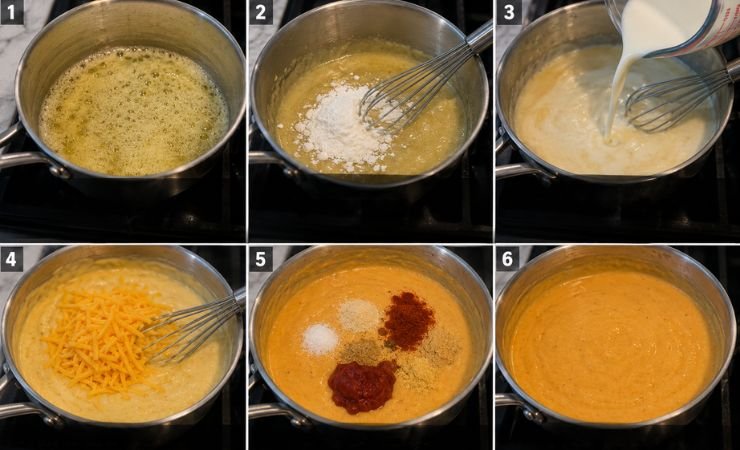
1. Prepare the Base: Melt the butter in a medium saucepan over medium heat to make the sauce rich and creamy. When the butter melts, it will foam and smell nutty, indicating it’s ready for the next step. Stir constantly to avoid burning.
2. Add the Cornstarch: Once the butter is melted, add the cornstarch and cook it for 1 minute. thickens the sauce and gives it a smooth texture. You’ll notice a starchy, nutty smell as it cooks. Stir with a whisk to prevent lumps, but don’t overcook it, or it may taste raw.
3. Add the Milk and Sodium Citrate: Next, slowly whisk in the milk and add the sodium citrate to create a smooth, creamy texture. As you whisk, the sauce will thicken and emulsify. Be cautious not to add the milk too fast, as it can cause separation. Use steady whisking to avoid lumps.
4. Melt the Cheese: Reduce the heat to low and gradually add the shredded cheese while stirring continuously until smooth, giving the sauce a rich texture. You’ll smell a savory aroma as the cheese melts. Add it slowly to prevent separation, using gentle stirring to avoid lumps.
5. Season the Sauce: Finally, season the sauce with salt, onion powder, tomato paste, smoked paprika, mustard powder, and lemon juice to balance the flavors. As you add the seasonings, the sauce will take on a complex aroma. Use your right hand when seasoning to avoid bitterness.
6. Serve and Store: Once seasoned, you can serve the sauce right away or store it in the fridge for later. It will be rich and creamy with a deep flavor. Avoid overheating when reheating, as this can cause separation. Use gentle heat to maintain its quality.
Tips for Fixing and Perfecting Your Cheese Sauce
Sauce Is Too Thick: Whisk in milk 1 tablespoon at a time until it loosens. Cooling thickens it further, so stop a little short of pourable.
Sauce Is Too Thin: Stir 1 teaspoon cornstarch into 1 tablespoon cold milk, whisk it in, and cook for 1 more minute.
Sauce Looks Grainy or Oily: The heat ran too high. Pull the pan off the burner, add a splash of milk, and whisk hard. Never reheat it past a gentle steam.
Sauce Tastes Bitter: Over-seasoning or scorched paprika is the cause. Whisk in 2 tablespoons of milk to dilute it.
Sauce Tastes Flat: Add a pinch of salt and ⅛ teaspoon more mustard powder, then taste again. Wait 30 seconds so the spices settle.
Sauce Has Lumps: Pour it through a fine mesh sieve, or pulse it with an immersion blender for 10 seconds. Reheat gently afterward.
Delicious Variations to Try at Home
Spicy Cheddar Cheese Sauce: Stir in diced jalapeños, hot sauce, cayenne, or red pepper flakes. One time, I added diced jalapenos for a spicy kick, and the heat paired well with the sharp cheddar. I spoon this one over nachos on game days.
Smoky Cheddar Cheese Sauce: Replace the paprika with 1 teaspoon of minced chipotle in adobo. It adds a deep smoke and a faint sweet tang. Start with half a pepper for a milder smoke. I pour it over smash burgers.
Garlic and Herb Cheddar Cheese Sauce: Add 1 minced clove and 1 tablespoon of chopped chives at the end. Mince the garlic fine so it softens in the residual heat. Grated shallot adds sweetness and a savory edge. I serve it with roasted potatoes.
Vegan Cheddar Cheese Sauce: Use plant butter, unsweetened cashew milk, vegan cheddar, and 2 tablespoons of nutritional yeast for cheesy depth. It turns slightly thinner, so simmer it 1 extra minute. I serve it with steamed broccoli.
Bacon Cheddar Cheese Sauce: Fold in 3 tablespoons of crumbled bacon after seasoning. The smoke and salt deepen the cheddar. I ladle it over baked potatoes with chives.
What to Serve With This Cheddar Cheese Sauce
You can enjoy this sauce with fries, burgers, and vegetables. It also works as a dip for crackers or chips. Crunchy partners like crinkle fries or raw celery contrast with the smooth sauce. Tortilla chips work the same way.
Pair it with something that lightens the richness. A green salad with a light vinaigrette cuts through the butterfat. Sparkling water with lemon does the same job. Pickled onions on the side add a sharp counterpoint.
Soft pretzels, roasted cauliflower, and steamed broccoli also hold a thick coat of sauce. Freezer-aisle pretzels bake in about 12 minutes, which is just enough time to finish the sauce. Dip them while the sauce is warm.
How to Store and Reheat Leftover Cheese Sauce
Refrigerate the sauce in an airtight container at 40°F or below for up to 5 days. Press plastic wrap against the surface so a skin does not form. A shallow container cools faster and keeps the texture even. Cold sauce firms up, which is expected.
For longer storage, freeze it in an airtight container for up to 3 months. Label it with the date, and freeze ½-cup portions. Thaw overnight in the fridge. Thawed sauce can look curdled, but whisking over low heat smooths it.
Reheat in a saucepan over low heat, whisking until smooth and creamy. The microwave also works in 30-second bursts, with a whisk between rounds. A splash of milk in the pan keeps it creamy. Overheating makes the sauce separate.
A separated sauce comes back with a splash of milk and fast whisking off the heat. The sauce can be made ahead and reheated just before serving. Make it up to a day early for parties.
Wendy’s Cheddar Cheese Sauce Recipe FAQs
1. Where do I buy sodium citrate?
Order it online from Modernist Pantry or a large retailer. A 1-pound bag lasts years, since each batch uses only ½ teaspoon. Keep it sealed in a dry cupboard, away from steam. The powder dissolves best in warm milk.
2. How much sauce does one batch yield?
One batch makes roughly 1¾ cups of sauce, enough for two large orders of fries or six burgers. The sauce takes about 12 minutes from butter to finished, so a double batch is still a quick job.
3. Can I serve it chilled as a vegetable dip?
Yes, but chilled sauce stiffens. Let it sit 20 minutes at room temperature, or stir in 1 teaspoon of milk until it relaxes. Carrots and celery sticks hold up best, and cucumber coins work too.
4. Can I keep it warm for a party?
Use a small slow cooker on the warm setting and stir every 20 minutes. Hold it above 140°F for food safety, and discard any sauce that has sat out longer than 2 hours.
5. Can I use it for mac and cheese?
Yes. Stir 1 cup of sauce into 8 ounces of cooked elbow macaroni. Loosen it with a splash of pasta water, then bake at 375°F for 15 minutes for a crisp top. Breadcrumbs on top add crunch.
6. Can I use smoked cheddar?
Yes. Use it in place of the paprika and drop the added salt to ⅜ teaspoon. Smoked cheddar already carries plenty of smoke and salt.
7. Can I use 2% milk?
Yes, but the sauce turns thinner and breaks more easily. Keep the heat low and add the cheese one handful at a time. Whisk in an extra ½ teaspoon of cornstarch for body.
8. Can I use evaporated milk?
Yes. Use 1 cup of evaporated milk in place of the whole milk. The sauce comes out thicker, creamier, and slightly sweeter, with a lower risk of splitting. Cut the cornstarch to ¾ tablespoon.

Wendy's Cheddar Cheese Sauce Recipe
This Wendy's Cheddar Cheese Sauce Recipe is creamy, rich, and ready in just 17 minutes using sharp cheddar and simple pantry staples!
Ingredients
- 1 cup whole milk
- 1 and ½ cups sharp cheddar cheese, freshly shredded
- 1 tablespoon unsalted butter
- 1 tablespoon cornstarch
- ½ teaspoon salt
- ½ teaspoon onion powder
- ½ teaspoon tomato paste
- ¼ teaspoon smoked paprika
- ¼ teaspoon mustard powder
- ½ teaspoon fresh lemon juice
- ½ teaspoon sodium citrate
Instructions
- Prepare the Base: Melt the butter in a medium saucepan over medium heat to make the sauce rich and creamy. When the butter melts, it will foam and smell nutty, indicating it's ready for the next step. Stir constantly to avoid burning.
- Add the Cornstarch: Once the butter is melted, add the cornstarch and cook it for 1 minute. thickens the sauce and gives it a smooth texture. You'll notice a starchy, nutty smell as it cooks. Stir with a whisk to prevent lumps, but don't overcook it, or it may taste raw.
- Add the Milk and Sodium Citrate: Next, slowly whisk in the milk and add the sodium citrate to create a smooth, creamy texture. As you whisk, the sauce will thicken and emulsify. Be cautious not to add the milk too fast, as it can cause separation. Use steady whisking to avoid lumps.
- Melt the Cheese: Reduce the heat to low and gradually add the shredded cheese while stirring continuously until smooth, giving the sauce a rich texture. You'll smell a savory aroma as the cheese melts. Add it slowly to prevent separation, using gentle stirring to avoid lumps.
- Season the Sauce: Finally, season the sauce with salt, onion powder, tomato paste, smoked paprika, mustard powder, and lemon juice to balance the flavors. As you add the seasonings, the sauce will take on a complex aroma. Use your right hand when seasoning to avoid bitterness.
- Serve and Store: Once seasoned, you can serve the sauce right away or store it in the fridge for later. It will be rich and creamy with a deep flavor. Avoid overheating when reheating, as this can cause separation. Use gentle heat to maintain its quality.
Nutrition Information:
Serving Size: 1Amount Per Serving: Calories: 110
The Wendy’s Cheddar Cheese Sauce Recipe depends on two choices: aged sharp cheddar and low, patient heat. Shred the block yourself and add it a handful at a time. The sauce then clings to fries, burgers, and broccoli alike.