Guy Fieri Prime Rib Recipe
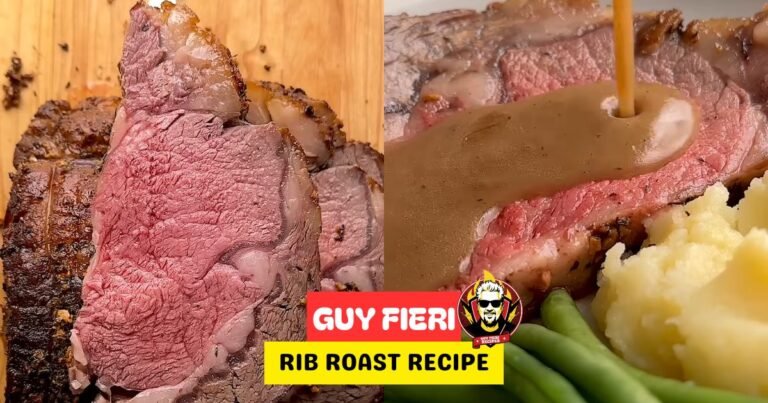
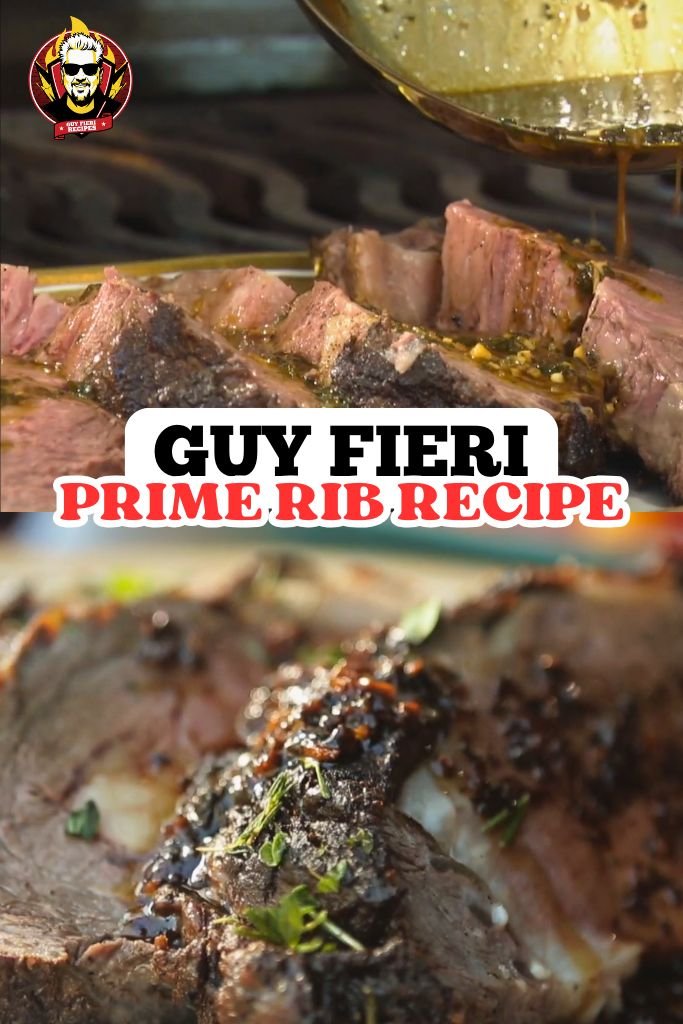
Guy Fieri Prime Rib Recipe emphasizes bold style and a clear method. He often uses a reverse-sear technique, which means he cooks the roast slowly, then finishes it at high heat to achieve a nice crust and the right level of doneness.
You can use this method in an oven, grill, or smoker. It relies on careful temperature control, precise timing, and letting the meat rest to ensure consistent results from start to finish.
It serves 4-6 people and takes about 3½ hours to make, plus time for resting. This recipe is worth the effort because the taste is incredible.
What Makes Guy Fieri Prime Rib Different?
Guy Fieri’s prime rib is known for its strong flavors and special cooking method. He uses a dry rub with different spices instead of just salt and pepper.
To get a nice crust, he sears the roast in a hot cast-iron skillet before putting it in the smoker, creating a thick, caramelized exterior without overcooking the meat.
Layering flavors is important, he adds fresh herbs like thyme, rosemary, and oregano during the searing process. He also uses apple and hickory wood smoke to boost the taste.
Dry Rub vs. Marinade
Guy Fieri chooses a dry rub instead of a wet marinade for good reasons. A marinade adds moisture, which turns to steam when cooking. This steam prevents a good crust and makes the bread’s outside soft.
A dry rub pulls moisture out of the meat through osmosis. This process allows the spices to soak back into the meat while keeping the surface dry. As a result, you get better browning and a lasting crust.
Ingredients for Guy Fieri Prime Rib
Beef Rib Roast (5 lb.): For this recipe, use a 5-pound beef rib roast. The best choice is a bone-in standing rib roast, as the bone adds great flavor while cooking. You can also use a boneless ribeye roast if you prefer.
Kosher Salt (2 tablespoons): Use coarse kosher salt for the dry rub. It pulls moisture from the meat’s surface and thoroughly seasons it. Avoid table salt because it is too fine and can make the crust taste metallic. Sea salt is also a good option.
Fresh Cracked Black Pepper (1 tablespoon): Make sure to crack the pepper with a pepper mill instead of using pre-ground pepper. Coarse pepper creates a nice texture for the crust and enhances the flavor as it cooks in the skillet. Fine black pepper can burn easily and lose its taste.
Dry Mustard (1 teaspoon): This adds a sharp, tangy flavor that complements beef without being overpowering. It helps other spices stick to the fat cap. If you don’t have dry mustard, you can use a little bit of regular yellow mustard. Just spread it thinly on the surface before adding the rest of the spice rub.
Granulated Garlic (1 tablespoon): Use granulated garlic instead of garlic powder. Granulated garlic is coarser and does not clump, which creates small bits of toasted garlic in the crust. Fresh minced garlic can also be used, but press it firmly into the meat so it stays on during searing.
Paprika (2 teaspoons): Smoked paprika adds color and a mild, sweet pepper taste. To enhance the smoky flavor in an oven-cooked dish, use smoked paprika.
Cayenne Pepper (½ teaspoon): Use just a small amount for warmth. The goal is to add a gentle warmth at the end, not to make it spicy. If you are cooking for someone sensitive to heat, either use half a teaspoon or leave it out completely.
Fresh Herbs (for the pan): Use fresh herbs to season the pan before you sear the meat. Put 3 to 4 sprigs of rosemary and 4 to 5 sprigs of thyme in the cast-iron skillet. The hot fat will enhance the roast’s flavor. You can use dried rosemary, but it has a milder taste. Thyme adds a light, citrusy flavor that goes well with rosemary.
Fresh oregano (2-3 sprigs): Guy Fieri uses oregano in the herb mix in the skillet. It is a softer herb that enhances the flavors of thyme and rosemary. You can also use dried oregano.
Tools I Recommend for This Recipe
- Use a kettle-style grill or smoker for indirect-heat cooking with smoke control.
- A probe-style meat thermometer helps you check the internal temperature without guessing.
- A cast-iron skillet is ideal for searing meat and adding herbs.
- Butcher’s twine is useful for tying herb bundles.
- An aluminum drip pan catches juices and keeps your grill clean.
- Use tongs and heat-resistant gloves to handle hot roasts safely.
How to Season Prime Rib Properly
Season your prime rib at least 1 day before cooking. First, pat the meat dry. Then, rub seasoning all over it. For the best results, rub kosher salt on the roast and leave it uncovered in the fridge overnight.
The next day, two hours before cooking, take the roast out of the fridge. Dry it with paper towels and rub spices on it. Let it sit at room temperature. Adding any extra spices before cooking helps keep it juicy and creates a nice crust.
How to Cook Guy Fieri Prime Rib Using the Reverse Sear Method
Understand the Reverse Sear
The reverse sear method changes the usual way of cooking. Instead of searing the meat first and then roasting it, you roast it first and sear it at the end. Guy Fieri does this by searing the meat in a cast-iron skillet over charcoal, then finishing it in the smoker.
Slow Roast
For the oven method, place the seasoned prime rib on a wire rack and roast it slowly at 225°F. This low heat helps cook the meat evenly, making sure it’s done all the way through.
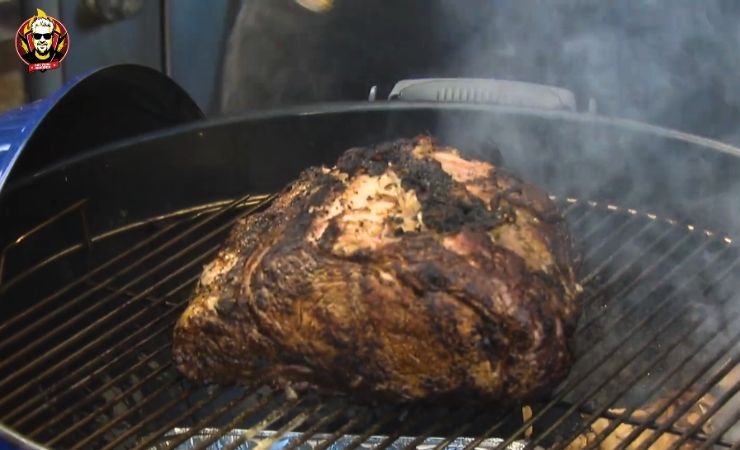
Rest Before High Heat
Once the internal temperature reaches your goal, remove the roast and let it rest while you heat the oven to 500°F
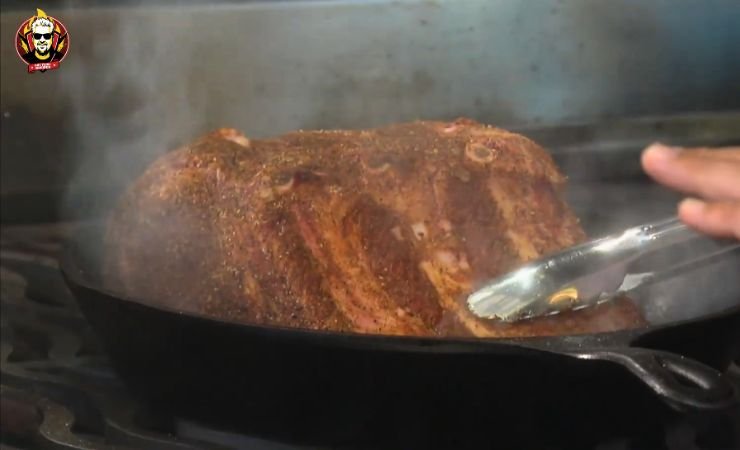
High-Heat Sear
Putting the roast back into the oven or skillet for a short time at high heat creates a nice, brown crust on the outside without overcooking the inside.
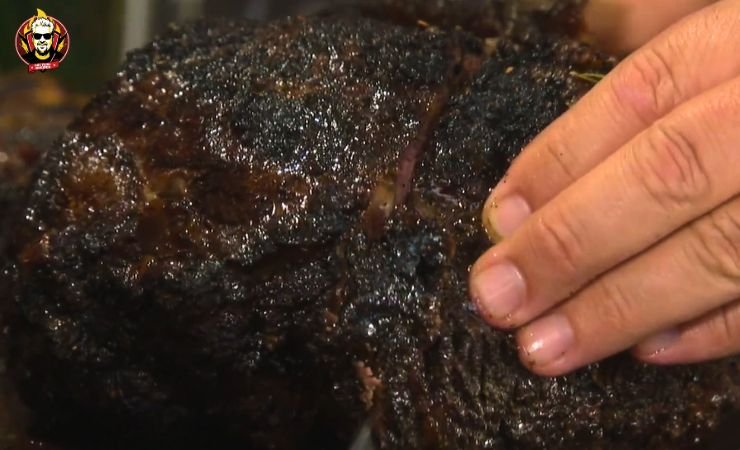
Final Rest and Serve
After searing, let the roast rest briefly again before carving. This method keeps the meat juicy and ensures it cooks evenly from edge to center, avoiding a gray overcooked layer under the crust.
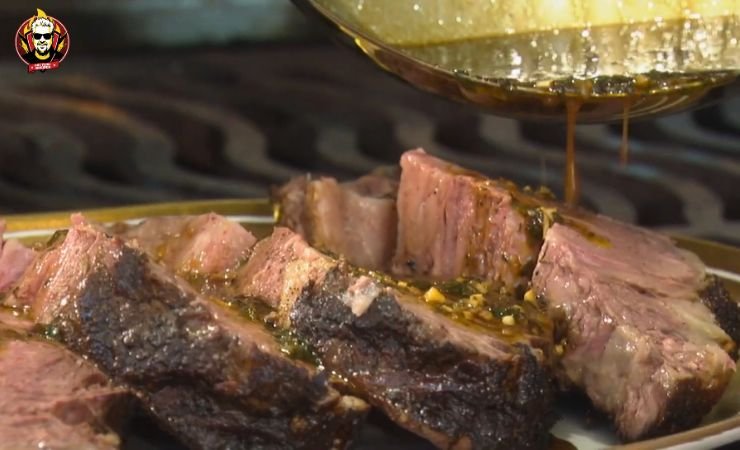
Prime Rib Cooking Temperature
To cook prime rib well, it’s important to check the internal temperature to achieve the desired doneness. For rare, take the roast out at 120–125°F; it will rise to 125–130°F after resting. For medium rare, remove it at 130–135°F, which will finish at 135–140°F. For medium rare, pull it at 135–145°F, ending at 140–150°F.
If you want it well done, the roast should be at 150°F or higher, reaching 160°F or higher after resting. Following these temperature ranges gives you consistent results and the doneness you want.
Alternative Cooking Methods
Prime Rib on a Grill
Use a charcoal grill with indirect heat. Place the coals on one side and the roast on the other side. Heat the grill to 225°F and keep the vents open about a quarter.
Put the roast bone-side down on the cool side, add soaked wood chips, and maintain the temperature for 2.5 to 3.5 hours. Sear the roast for the last 10 minutes. Aim for an internal temperature of 125–128°F for medium rare.
Make It in a Smoker
Use a smoker set to 225°F. Use apple and hickory wood for flavor. Place the roast, bone side down, and smoke it for 2.5 to 5 hours. Remove the roast when it reaches 125°F for medium rare.
You can sear it if you want and let it rest before slicing.
Cook Prime Rib in a Dutch Oven
This method isn’t the best because it traps moisture. If you decide to use it, first brown the roast, then bake it uncovered at 275°F to get a juicy roast, but it won’t have the same crust.
For the best results for Guy Fieri Prime Rib Recipe, use the Reverse Sear Method in the oven.
How to Prevent Overcooking Prime Rib
To avoid mistakes, cook on low heat for better control. Use a thermometer to check the meat temperature, eliminating the guesswork. After cooking, let the roast rest.
Resting helps the juices return to the meat. Wait at least 30 minutes before slicing. I loosely cover the roast with foil while it rests to keep it warm without steaming the outside.
For the best crust, make sure the surface is dry. I pat the roast dry before seasoning it. Use salt early to draw out moisture. Finish cooking with high heat to create a dark, crisp layer. Brushing butter or fat on the surface helps it brown.
What to Serve with Guy Fieri Prime Rib
To serve prime rib, plan about 1 pound of meat per person if you have a bone-in roast. Start with sauces. Au jus and horseradish cream are great options.
To make au jus, simmer beef drippings with stock, add salt and pepper, then strain. Serve warm. To make horseradish cream, mix sour cream, horseradish, salt, and a bit of lemon juice.
Good side dishes for prime rib include roasted potatoes, creamed spinach, mac and cheese, or grilled vegetables.
Storage & Leftovers
You can keep leftover prime rib in the fridge for 3-4 days. Wrap it tightly. If you want to store it longer, freeze the slices for up to 3 months.
When reheating, do it slowly in a low oven with broth to keep it moist. You can use leftovers in sandwiches, hash, tacos, or stroganoff.
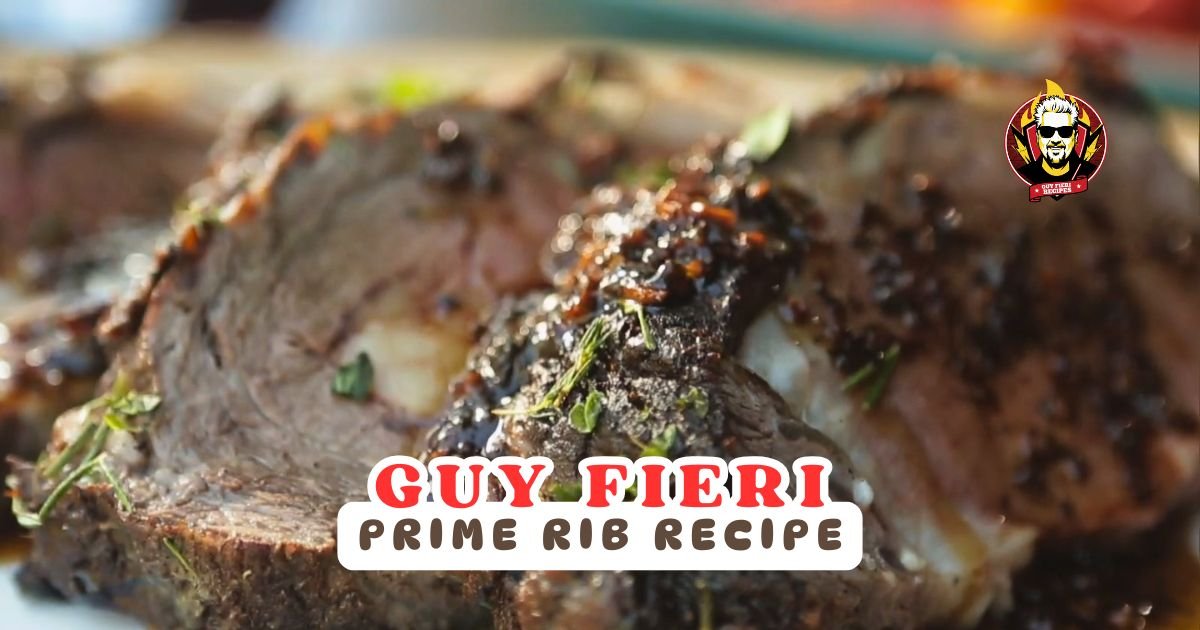
Guy Fieri Prime Rib
Prep Time: 15 mins | Cook Time: 3 hrs 30 mins | Resting: 30 mins | Total Time: 4 hrs 15 mins
Servings: 4–6 | Calories: 850 kcal
Ingredients
- 5 lb. beef rib roast, bone-in
- 2 tablespoons kosher salt
- 1 tablespoon fresh cracked black pepper
- 1 teaspoon dry mustard
- 1 tablespoon granulated garlic
- 2 teaspoons smoked paprika
- ½ teaspoon cayenne pepper
- 3–4 sprigs fresh rosemary (for skillet)
- 4–5 sprigs fresh thyme (for skillet)
- 2–3 sprigs fresh oregano (for skillet)
Instructions
- Pat roast dry. Rub kosher salt all over and refrigerate uncovered overnight. Two hours before cooking, dry again and rub remaining spices. Let come to room temperature.
- Preheat oven/grill/smoker to 225°F (107°C).
- Place roast on wire rack over pan. Cook until internal temp reaches 120–125°F (rare) or 130–135°F (medium rare).
- Remove roast and rest while heating oven/skillet to 500°F (260°C).
- Sear roast with fresh herbs in hot cast-iron skillet or oven for 5–10 mins until crust forms.
- Rest roast 20–30 mins before slicing.
- Serve with au jus, horseradish cream, and side dishes.
Guy Fieri Prime Rib Recipe delivers a rewarding dish to make. Start with a bone-in Choice or Prime rib roast. Season it a day before cooking. Remove it from the heat when it reaches 125°F and let it rest properly. This method will help your roast turn out great every time.